3D Projection Mapping for Events: Quick Guide for Businesses
Introduction
Imagine stepping into an event space and seeing the walls come to life, enveloping you into a dream of technicolour movement and texture. As a Singapore animation & motion graphics studio, we strive to find moments that matter and help capture the exact feeling our clients hope to convey.
If you are exploring 3D projection mapping for events, this guide breaks down what it is, why it works, and how to decide if it is worth the investment for your next campaign or experience.
- What is Projection Mapping?
- Why Businesses Invest in Projection Mapping
- Key Use Cases of 3D Projection Mapping
- Key Cost Factors to Consider When Investing in Projection Mapping
- Is Projection Mapping Right for Your Event?
- What to Look for When Hiring a Projection Mapping Company
1. What is Projection Mapping?
3D projection mapping is a technique that takes an ordinary surface, like a wall, and turns it into a canvas for a visual experience. Instead of projecting onto a regular flat screen, these visuals can be mapped onto almost any physical surface – from buildings, to stages, or even isolated objects. This is done by carefully designing and aligning the visuals to the exact shape and contours of the desired surface. Pair that precise, custom content with high-powered projectors, and it creates the illusion that the structure itself is moving.
2. Why Businesses Invest in Projection Mapping
The reason 3D projection mapping has been making a splash at major launches, brand activations, and high-budget corporate events, is because it delivers an impact that traditional visuals struggle to compete with.
a. Captures attention instantly
Projection mapping immediately captures attention in a live event setting by transforming familiar surfaces into dynamic visual experiences, making it difficult for audiences to ignore. Unlike traditional screens or static visuals, 3D projection mapping creates a sense of surprise and scale that draws attention even in crowded or distraction-heavy environments.
b. Creates stronger brand recall
3D projection mapping leaves a lasting impression because audiences go beyond observing content – instead, they experience it in a physical space. It creates an immersive and memorable experience that will last with your audience, as they associate these moments of magic with your brand long after the event ends.
c. Elevates event perception
There’s a heightened level of creativity, planning, and investment that’s demanded by 3D projection mapping that audiences are able to perceive. The gap between looking at a static poster and witnessing a 3D visual experience creates an overall more polished and premium experience that reflects positively on the brand behind it.
d. Drives engagement and shareability
3D projection mapping creates visually striking moments that audiences would want to capture and share. An experience that feels unique and immersive is naturally going to increase the likelihood of user-generated content, which helps expand the reach of your event beyond its physical attendees.
e. Communicates messages more effectively
By combining motion, scale, and storytelling, you help audiences follow and understand information more easily. Presenting a ten-page deck crammed with graphs and jargon or text-heavy static displays just doesn’t hit the same as an immersive experience that grabs your audience’s attention and gets your message across in a more receptive, engaging, and effective manner.
f. Maximises space and creates flexibility
Projection mapping makes use of existing surfaces, turning them into visual assets without the need for extensive physical builds. This allows for greater flexibility, as content can be updated or adapted without changing the setup, while also creating distinct highlight moments that give the event a clear focal point.
3. Key Use Cases of 3D Projection Mapping
a. Brand Activation
Projection mapping helps create high-impact, immersive experiences that audiences remember and share.
Example: Singapore Odyssea: A Journey Through Time
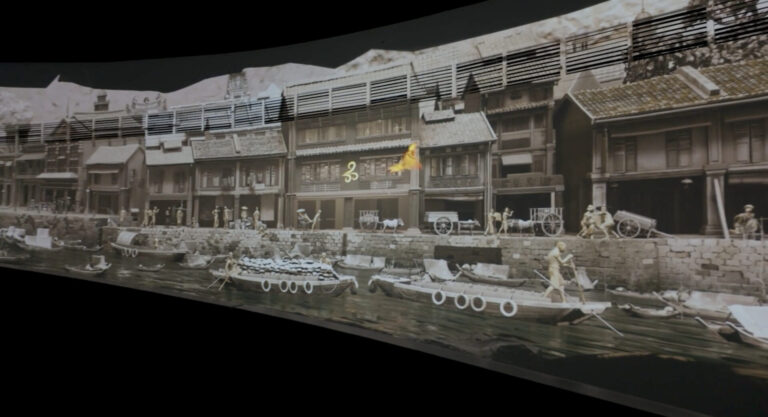
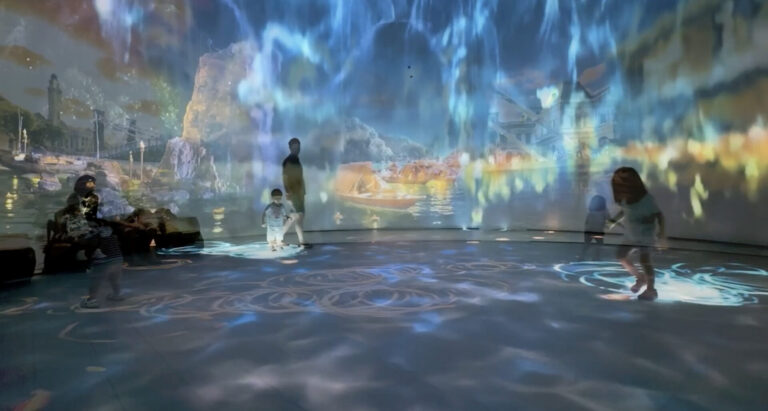
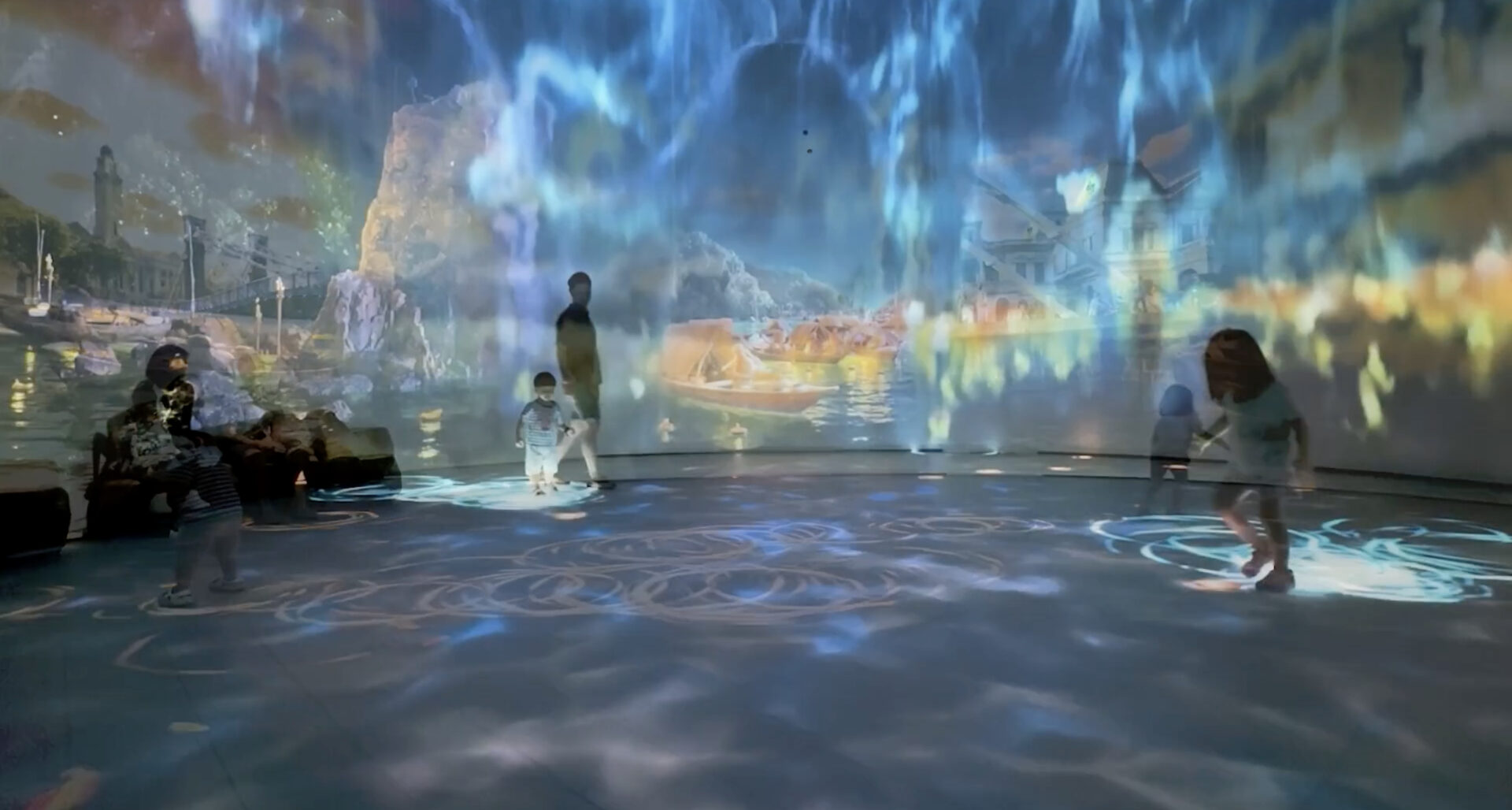
This project used projection mapping across a large physical environment, turning walls and surfaces into a continuous visual narrative that guides audiences through different eras of Singapore’s history. Instead of relying on static displays, the experience combines motion, lighting, and storytelling to create a sense of progression and immersion, encouraging audiences to move through the space and engage with every scene.
For businesses, this approach can be applied to turn brand messages into immersive environments rather than one-off visuals – whether it’s guiding audiences through a brand story, highlighting key milestones, or creating moments designed for interaction and sharing. This not only increases dwell time during the activation but also encourages user-generated content that extends the brand’s reach beyond the event itself.
b. Product Launches
Product launches rely heavily on timing, anticipation, and presentation to build and pay off the hype around a new product. 3D projection mapping enhances all three of those factors by turning the reveal into a structured and dynamic visual experience.
Example: Isuzu: Isuzu FTR Truck Launch
In this example, projection mapping builds anticipation before the product is revealed. Visuals evolve across the surface, leading up to the moment where the product is introduced in a controlled and engaging manner. This approach allows key features to be highlighted through motion and sequencing, giving the actual reveal more of an impact.
For businesses, this approach can be applied to transform standard product reveals into staged visual experiences that help guide the audience through the journey. Whether it’s facilitating a grand unveiling or reinforcing brand positioning, this increases audience engagement during the launch while also encouraging social sharing that extends visibility beyond the event itself.
c. Corporate Events
Corporate events often require a balance between professionalism and audience engagement. Projection mapping helps create that balance by enhancing the environment without disrupting the tone of the event.
Example: Esplanade: Dancing with Light
Created for a 20th anniversary celebration, this project transformed the outside of the venue into an immersive visual environment. CraveFX collaborated with dancers during the production process to craft a dynamic visual experience that interacted with the architecture of the space, imbuing a pop of fantasy into the everyday urban landscape.
For businesses, this approach can be applied to elevate corporate events by turning standard venues into visually engaging environments. 3D projection mapping can help create a more memorable experience while maintaining a polished and professional presentation.
d. Exhibitions & Trade Shows
In exhibitions and trade shows, attracting attention is essential. Projection mapping provides a way to stand out in a visually crowded environment.
Example: UMI Group: Wavin Exhibition Booth
In this example, Wavin’s booth utilizes 3D projection mapping to transform an entirely ordinary booth into an eye-catching feature of the event space. In a hall filled with monotonous, cookie-cutter exhibition booths, the use of projection mapping takes a product as simple as a plastic pipe and makes it interesting to look at and learn about.
For businesses, this approach can be applied to turn exhibition booths into immersive brand environments that naturally attract and retain attention. In crowded, loud environments like a trade show, 3D projection mapping can earn your booth higher footfall, increased engagement time, and more opportunities for meaningful interactions with potential clients.
4. Key Cost Factors to Consider When Investing in Projection Mapping
The cost of 3D projection mapping for business varies depending on several factors, and understanding them will help you plan and allocate your budget more effectively.
a. Size and complexity of the projection surface
Larger or irregular surfaces require more detailed planning, calibration, and alignment, which increases both setup time and overall complexity. As a result, selecting a flatter and more uniform surface can help reduce the need for intricate mapping, keeping costs manageable.
b. Type of content (simple vs storytelling-driven)
Content that involves detailed storytelling, custom animation, and multiple visual sequences requires more time for creative development and production, which increases overall cost. Focusing high-effort content on key moments, and keeping your supporting visuals on the simpler side, will allow you to maintain the desired impact without overextending your budget.
c. Scale of setup required
A larger setup typically involves more projectors and additional technical support, which contribute to higher costs. Concentrating your 3D projection mapping on a specific focal area instead of blanketing an entire venue in 3D graphics can help you achieve a strong visual impact while keeping the setup more efficient.
d. Indoor vs outdoor environment
Outdoor environments often require brighter projectors and additional considerations such as weather protection and ambient light control, which can increase equipment and setup costs. Indoor venues provide a more controlled setting, making it easier to manage conditions and optimize the use of resources.
e. Duration of the event
Longer event durations may require extended equipment rental, ongoing technical support, and additional maintenance, which adds to the overall investment. Focusing the use of 3D projection mapping during key segments or highlight moments instead of running it continuously can help you manage costs while still delivering a strong experience.
5. Is Projection Mapping Right for Your Event?
Projection mapping yields its highest results when it makes sense for the setting. Here are a few key questions that can help you decide whether 3D projection mapping aligns with the goals of your event:
a. Are you trying to create a memorable or premium experience?
If the goal is to elevate perception and leave a lasting impression, projection mapping adds a level of impact that standard visuals often cannot achieve. It transforms the environment itself, creating a more immersive experience that audiences are more likely to remember.
b. Does your budget match the level of impact you want?
Projection mapping is typically used for high-impact moments rather than everyday event visuals, so the investment should align with the importance of that moment. If your objective is to create a standout experience or just to draw a lot of attention, then it’s justifiable to allocate part of your budget to 3D projection mapping.
c. Does your venue support it?
The effectiveness of 3D projection mapping depends quite heavily on the physical environment you plan to use it in. The availability of suitable surfaces and the ability to control lighting conditions both factor into this. Venues with clear projection areas and minimal existing visual interference allow for cleaner and more convincing experiences.
d. Do you have a clear message or story to deliver?
While you could utilize projection mapping for purely decorative purposes, it tends to work best when there’s a clear message guiding the visuals. Structuring the content around a story or idea makes the experience as a whole more engaging and consequently, allows audiences to better understand and retain the message.
e. Do you want something publicity- or PR-worthy?
Projection mapping creates visually striking moments that people are naturally inclined to capture and share. This makes it particularly effective for generating buzz, encouraging user-generated content, and extending the reach of your event beyond the physical audience.
6. What to Look for When Hiring a Projection Mapping Company
a. Proven experience
Perhaps the clearest indicator of whether a projection mapping company can deliver reliably is whether they have a proven track record of successful launches. In the events industry, timing and execution is everything, and having an experienced team that’s able to anticipate challenges and roll with the punches is exceedingly valuable. Going over past events is a good way to gain insight into the consistency of their work, the types of projects they’ve handled, and the scale at which they are able to operate. A strong portfolio also gives you a better understanding of their creative range and whether their style will align with your vision.
b. Proper planning, testing, and rehearsal process
Projection mapping is incredibly versatile, but its wow-factor hinges on accuracy. A reliable vendor should be able to outline a clear end-to-end schedule, taking you from ideation and content development all the way through to execution. Nothing should be left to chance. Just as important is the testing process before the actual event day. Rehearsing the full setup in advance leaves time for the edits and adjustments that inevitably come up before an event, ensuring a smoother overall experience.
c. Ability to translate brand/message into visuals
Aside from technical execution, part of a projection mapping company’s value lies in their ability to know how to translate your specific brand message into a dynamic visual. It shouldn’t just be a fancy light show, rather, the visuals should reflect your identity and message in an intentional, consistent manner. Not everyone is able to take abstract ideas like brand values and campaign themes and encapsulate them in an easily understandable visual, but a capable projection mapping company should be able to.
d. Clear understanding of your event objective
Arguably the most important quality in a good projection mapping partner is their ability to understand what it is you’re trying to achieve – be that telling a story or launching a product. When the objective is well defined from the start, you can guarantee that every aspect of the process is done with purpose. This then ensures that every part of the experience works towards delivering your message and driving the desired audience response.
Conclusion
3D projection mapping is a tool you can use to create experiences that people will talk about, remember, and associate with your brand well after the event itself. The right execution can elevate your event with barely any extra effort on your end.
If you want to explore how projection mapping can work for you, consider working with a team that understands both the creative demands and strategic aspects of execution. As one of the leading animation and motion graphics studios in Singapore that has delivered large-scale immersive experiences like Singapore Odyssea: A Journey Through Time and Esplanade: Dancing with Light, CraveFX is ready to take you through the next steps of delivering a visual experience for your brand.
Ready to go? Get in touch today.