12 Projection Mapping Examples to Inspire Your Next Event
Introduction
If you’re looking to create a visually striking experience that audiences will talk about long after it’s over, 3D projection mapping is one of the most effective ways to do it. As the name suggests, it involves digitally mapping a space or object, then bringing it to life through projected visuals.
Instead of relying solely on traditional screens, 3D projection mapping allows you to work directly with the shape, structure, and texture of an object or environment. This opens up a wide range of creative possibilities, from concerts and immersive art installations to product launches, brand activations, and large-scale events.
As an animation and motion graphics studio and a 3D projection mapping company, we understand how projection mapping can turn a simple presentation into a more memorable visual experience. In this article, we explore 12 real-world examples of 3D projection mapping across different industries and formats to help inspire your next event.
- Singapore Odyssea: A Journey Through Time | 2024
- Coca-Cola 125th Anniversary Projection Mapping | 2011
- As Above, So Below | 2011
- Vivid Sydney: Lighting of the Sails | 2014
- Reflections: Guggenheim Museum Bilbao | 2017
- Netball World Cup | 2015
- BMW i8 Launch Projection Mapping | 2014
- Box | 2013
- Disney Castle Projection Shows | Various Years
- Tokyo Station Vision | 2012
- Sagrada Família Mapping Show | 2012
- Nespresso Table Mapping | 2019
1. Singapore Odyssea: A Journey Through Time | 2024
About the project:
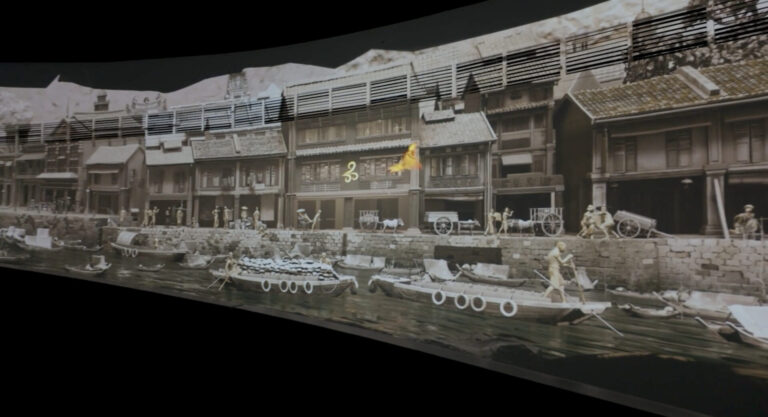
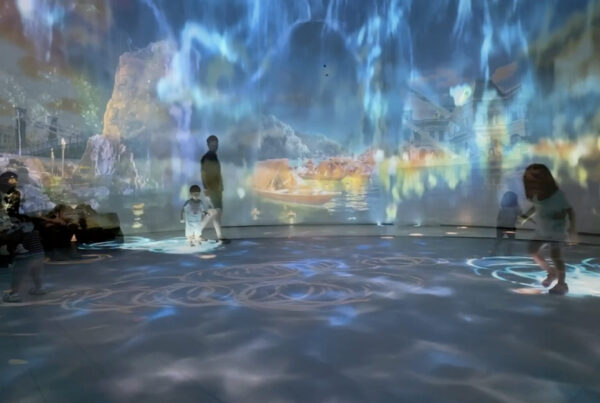
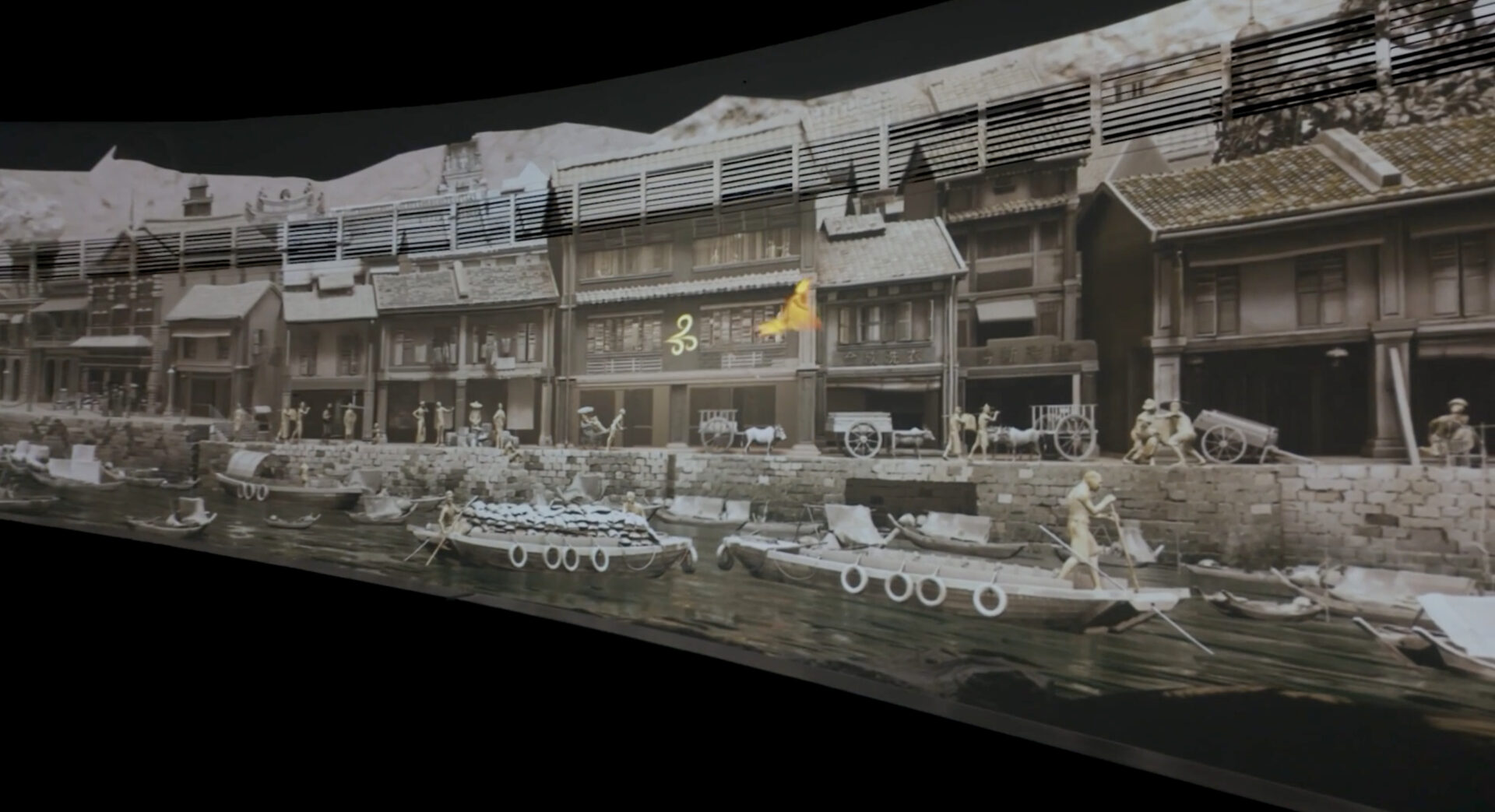
Singapore Odyssea: A Journey Through Time delivers exactly what its name suggests. Crafted by CraveFX for the National Museum of Singapore, the installation took visitors on an immersive journey through different periods of Singapore’s history. Rather than presenting history through a typical static lens, the exhibition space is reimagined as a moving narrative environment.
This was achieved through a mix of motion capture, VFX, and animation, which brought historical scenes, cultural imagery, and animated sequences to life. As visitors moved through the space, the use of motion, scale, and environmental visuals helped create a stronger sense of immersion, making the stories feel less like something to observe and more like something to experience.
Why this example stands out:
It stands out by how naturally it combines projection mapping with storytelling. Beyond using 3D projection mapping as a visual display, the installation used lighting, movement, and colour transitions to guide visitors through different emotional and historical moments. Museums are often passive spaces where visitors observe history from a distance, but this installation made the experience feel more immersive by allowing the audience to feel like they were stepping into the story.
2. Coca-Cola 125th Anniversary Projection Mapping | 2011
About the project:
To celebrate its 125th anniversary, The Coca-Cola Company collaborated with Obscura Digital to launch a massive 3D projection mapping installation at its headquarters in Atlanta. Covering all four sides of the tower, the projection transformed the building into a giant animated showcase for the brand.
The visuals stayed true to Coca-Cola’s classic identity, featuring vintage advertisements, animated bottles, and other recognizable brand elements across more than 200,000 square feet of surface area. Beyond simply displaying visuals on the building, the installation used architectural illusions, lighting, and movement to make the tower appear as though it was shifting and coming to life.
Why this example stands out:
While its scale is impressive, what makes the execution especially effective is how well the projection worked with the building’s height and structure. Instead of treating the tower like a flat screen, the installation used vertical movement and layered animations to create a stronger sense of depth and spectacle. One of the most memorable moments featured the tower transformed into a glass of iced Coke, filling up from bottom to top. Through 3D projection mapping, Coca-Cola did not just display its brand on a building, it made the brand feel larger than life.
3. As Above, So Below | 2011
About the project:
As Above, So Below was an immersive projection mapping installation created by Light Harvest Studio beneath the Manhattan Bridge in New York during the 2011 Dumbo Arts Festival. The installation transformed more than 25,000 square feet of architectural surface area into a projection canvas. Unlike the traditional projection mapping shows that were viewed from a distance, this installation placed audiences inside the projected environment. The surrounding tunnel architecture became part of the experience, allowing the visuals to wrap around viewers rather than simply appearing in front of them.
Why this example stands out:
More than a decade ago, As Above, So Below helped push 3D projection mapping beyond a surface-based visual spectacle and into something more spatial and immersive. Instead of directing the audience’s attention to a single facade, the projections filled much of their field of vision. Combined with the tunnel’s naturally enveloping structure, the result was a strong sense of immersiveness, as if visitors were physically inside the projection itself. For its time, it was a uniquely immersive use of projection mapping that still holds up well by today’s standards.
4. Vivid Sydney: Lighting of the Sails | 2014
About the project:
59 Productions transformed the Sydney Opera House into a massive animated canvas for the Vivid Sydney light festival 2014. The installation explored the evolution of architecture, civilisation, and technology, using the Opera House’s iconic sails as the foundation for its visual storytelling.
Across the show’s 15-minute runtime, the projections moved seamlessly across each sail, creating the illusion that the building itself was evolving and transforming. Rather than simply projecting visuals onto the landmark, the installation worked with its unique structure to make the architecture feel alive.
Why this example stands out:
The installation took one of the world’s most recognisable landmarks and turned it into a living canvas for storytelling. Using carefully mapped movement, colour, and texture, it went beyond spectacle to build a cohesive narrative about human development and innovation. Mapping visuals onto the Sydney Opera House is a complex challenge due to its layered sail structure, but the installation used that complexity to its advantage. Combined with the scale of the event, the result was one of the defining 3D projection mapping displays of its time.
5. Reflections: Guggenheim Museum Bilbao | 2017
About the project:
Reflections was a four-day installation created to celebrate the 20th anniversary of the Guggenheim Museum Bilbao. Another creation by 59 Productions, they transformed the museum’s titanium exterior into an exploration of light and motion, drawing over 300,000 spectators. The installation was inspired by architect Frank Gehry’s original vision of creating a building that interacts naturally with light. Building on that idea, the projection washed the Guggenheim in shifting textures, environments, and atmospheric conditions.
The show guided viewers through changing seasons and weather patterns, with drifting clouds, shimmering auroras, bursts of sunlight, and dramatic thunderstorms moving across the museum’s curved surfaces. These visuals were synced with a musical score, helping shape the pace and emotional tone of the entire experience.
Why this example stands out:
It worked closely with the Guggenheim’s unusual architecture – the museum’s flowing metallic curves became essential to the animation, allowing textures, lighting effects, and motion to move naturally across the structure. This made the installation feel more artistic and site-specific. By combining architecture, sound, and evolving organic imagery, Reflections felt less like a projection placed onto the museum and more like a living extension of the building itself.
6. Netball World Cup | 2015
About the project:
For the 2015 Netball World Cup in Sydney, NovaTech transformed the entire court of the Sydney Allphones Arena into a projection canvas. The arena floor came alive with dynamic animated graphics, lightning effects, and game footage, turning the playing surface into part of the event experience. In front of 17,000 spectators, the court appeared to collapse and piece itself back together before being overtaken by tournament visuals featuring the players who were about to compete on it. This created a strong build-up before the game even began, turning the pre-match moment into a spectacle of its own.
Why this example stands out:
The installation transformed the largest and most visible surface in the arena into an active visual element. Instead of treating the playing area as a static surface, it elevated it into part of the main spectacle. Even simple visuals, such as lights running across the goal lines and sidelines, became highly effective in building excitement and anticipation. This example shows that immersive visuals do not always need to be overly complex to engage an audience. When used strategically, they can turn a familiar space into a more dynamic and memorable experience.
7. BMW i8 Launch Projection Mapping | 2014
About the project:
During the launch of the BMW i8, BMW utilised 3D projection mapping to highlight the vehicle’s futuristic design and sustainability-focused engineering. The car itself became the projection surface, with visuals mapped precisely onto the body of the vehicle during live reveal events. The projections featured flowing energy patterns, digital grids, lighting effects, and animated graphics that emphasised the car’s aerodynamic structure and hybrid technology.
Why this example stands out:
The projections were designed specifically around the contours and geometry of the vehicle. The visuals enhanced the car’s form with movement and lighting, drawing attention to specific design lines and surfaces. Through projection mapping, the reveal became a futuristic reveal experience that reflected the innovation and design language of the BMW i8.
8. Box | 2013
About the project:
3D projection mapping can work especially well when combined with other technologies, and BOX is a strong example of that. Created by Bot & Dolly, BOX was an experimental projection mapping performance that used moving robotic panels and physical stage elements as its projection surfaces.
Unlike traditional building projections, the performance brought together robotics, choreography, motion tracking, and mapped visuals to create the illusion of a constantly shifting physical space that transformed around the performers. Geometric animations, optical illusions, and perspective distortions were all synchronised with the movement of the robotic panels, creating a highly controlled visual environment that blurred the line between physical and digital space.
Why this example stands out:
It showed how 3D projection mapping could interact with real-world movement, rather than remain fixed to a static surface. The precision between the robotic panels and projected visuals created illusions that changed in real time, making the performance feel less like a standard projection mapping piece and more like a reality-bending stage show. It also demonstrated how far projection mapping could be pushed when paired with the right creative and technical execution.
9. Disney Castle Projection Shows | Various Years
About the project:
Disney has been exploring projection mapping since the 1960s, with early examples seen in attractions like The Haunted Mansion. Since then, the technique has become a major part of its theme park experiences, especially on the Cinderella Castle in Florida and the Sleeping Beauty Castle in California.
These projection shows are often used during seasonal celebrations and nightly firework performances, where the castle facades become enormous canvases for some of Disney’s most iconic stories and characters. Each architectural section of the castle is carefully mapped, allowing the projections to create layered movement, depth, and transformation across the building.
Why this example stands out:
These projections stand out because they use architecture as an emotional storytelling tool, not just a display surface. The visuals work closely with the shape of the castles – windows glow, towers shift, and surfaces open into animated worlds. Disney’s advantage is that audiences already have a strong emotional connection to its stories and characters. Projection mapping allows that familiarity to feel physical and immediate, turning the castle into a shared moment of spectacle and wonder.
10. Tokyo Station Vision | 2012
About the project:
To celebrate the restoration of Tokyo Station’s historic Marunouchi building, its iconic 1914 brick facade was transformed into a massive 4D projection mapping canvas. The show utilised the station’s arches, windows, and symmetrical structure as framing devices for the story. Synced with live music and lighting, the projection took audiences through a visual timeline of the station’s past, present, and future. This helped turn the building from a historic landmark into an active part of the performance.
Why this example stands out:
The animators worked with the building’s layout instead of against it, using its natural rhythm, symmetry, and details to shape the pace of the show. This made the installation stand out, as the architecture itself drove the narrative. By blending archival imagery with futuristic effects, the installation made Tokyo Station feel like a bridge between its 1914 origins and modern Tokyo.
11. Sagrada Família Mapping Show | 2012
About the project:
In September 2012, a large-scale 3D projection mapping show was created for the inauguration celebrations of the Sagrada Família in Barcelona. The projections covered the cathedral’s highly detailed exterior, using its textured surfaces, carvings, and architectural depth as the foundation for the visuals.
Designed to honour architect Antoni Gaudí’s dream of seeing his masterpiece bathed in colour, the installation featured religious imagery, stained-glass-inspired colours, and symbolic sequences that highlighted the cathedral’s intricate design. Rather than treating the Sagrada Família as a blank canvas, the show used the building’s existing details to shape the visual experience.
Why this example stands out:
Rather than imposing a separate creative concept onto the cathedral, the installation worked in harmony with Gaudí’s vision. The visuals interacted with the building’s textures, carvings, and depth, creating a layered effect that felt embedded within the structure itself. Combined with the use of colour and lighting inspired by stained glass, the projections felt deeply connected to the venue and its history, enhancing its existing architecture instead of overpowering it.
12. Nespresso Table Mapping | 2019
About the project:
In 2019, AV Media Events partnered with Nespresso to create an immersive table projection mapping experience inside the baroque hall of the Church of St Giles. Instead of using a wall, stage, or building facade as the projection surface, the visuals were mapped directly onto the dinner table where guests were seated.
From the tablecloth to the place settings, the entire dining setup came alive with movement and texture. Animated visuals, motion graphics, and lighting effects moved across the banquet table, turning the meal into part of the visual experience. The ornate architecture of the hall also added to the atmosphere, blending the projection with the elegance of the venue.
Why this example stands out:
This example shows how projection mapping can transform even smaller event surfaces into immersive and memorable experiences. Rather than relying on a large building facade for impact, the installation turned the dining table itself into the centrepiece of the event. That made the experience feel more intimate and interactive for guests. In this case, the smaller scale worked in its favour, creating a projection mapping experience that was more personal and memorable than a distant large-scale display.
Conclusion
3D projection mapping is far more than light projected onto blank walls. When used in the right environment and aligned with the story you want to tell, it can pull audiences into a world built around your message.
Its strength lies in how it transforms real-world spaces into vessels for memorable experiences. A vehicle, a building, a court, or even a dining table becomes more than just a backdrop. With the right creative approach, these surfaces become active parts of the story itself.
If you want to explore ideas for your next event, working with an experienced 3D projection mapping company can help you bring those concepts to life. Check out our 3D projection mapping guide for businesses to get started.